 |
| Kay the Cayman |
 |
| Bumblestook |
Terminology
Before I get too lost in jargon in case anyone reading this isn't familiar with chassis codes and other names I might use, here's a quick glossary for you:
AP1 - S2000s made from 1999-2003. Had the F20C engine.
AP2 - Facelift S2000s made from 2004-2009. Had the F22C engine.
AP2V1 - AP2s made from 2004-2005 (more similar to AP1 but with a bigger displacement engine)
AP2V2 - AP2s made from 2006-2009 (AP2s with electronic throttle bodies and returnless fuel lines)
F20C - The original 2.0L S2000 engine that revved to 9000 rpm.
F22C - The 2.2L variant of the S2000 engine that revved to 8200 rpm but produced more torque.
987.1 - Boxster/Caymans made from 2006-2008.
987.2 - Boxster/Caymans made from 2009-2012. Switched to direct fuel injection (DFI).
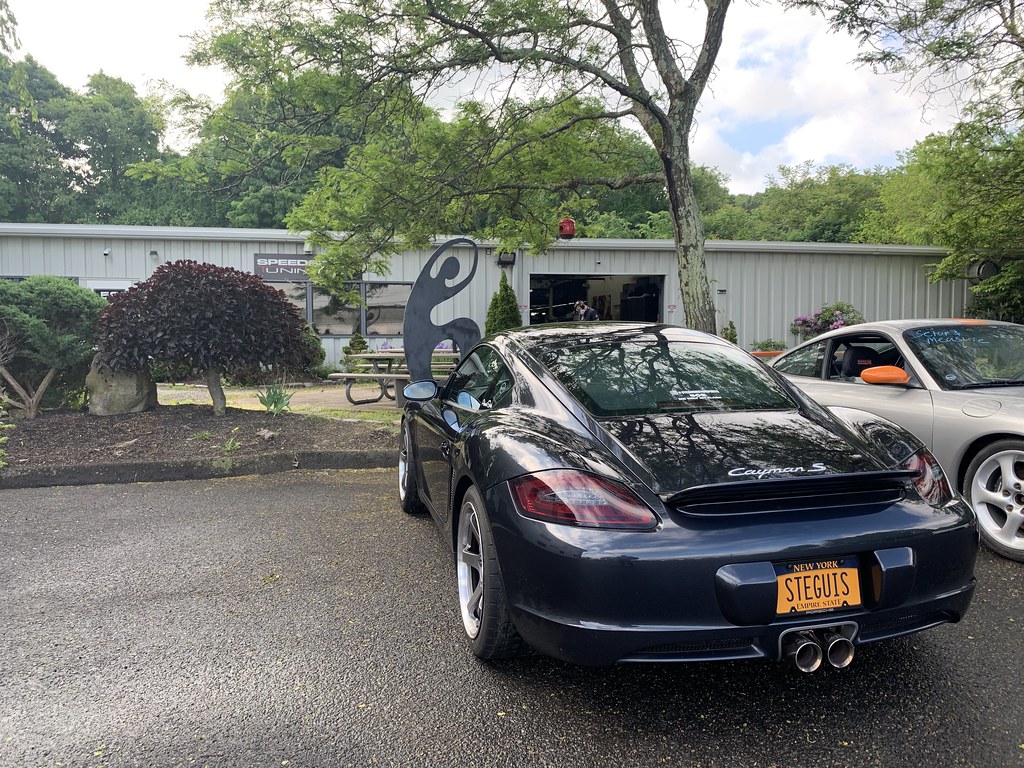
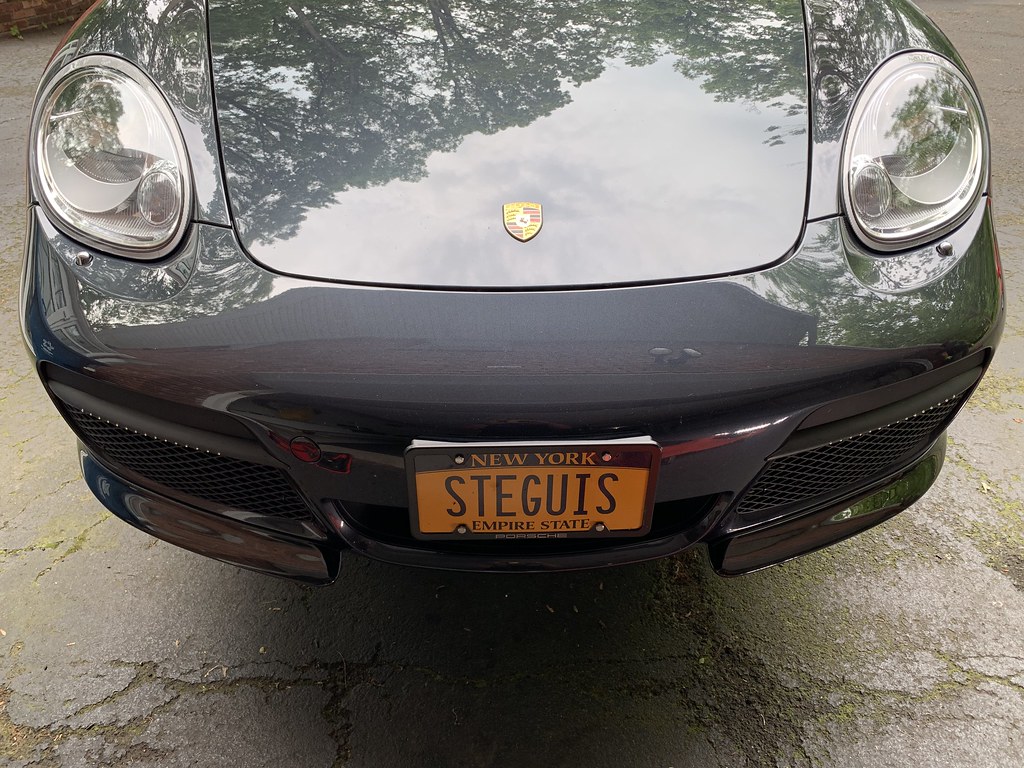
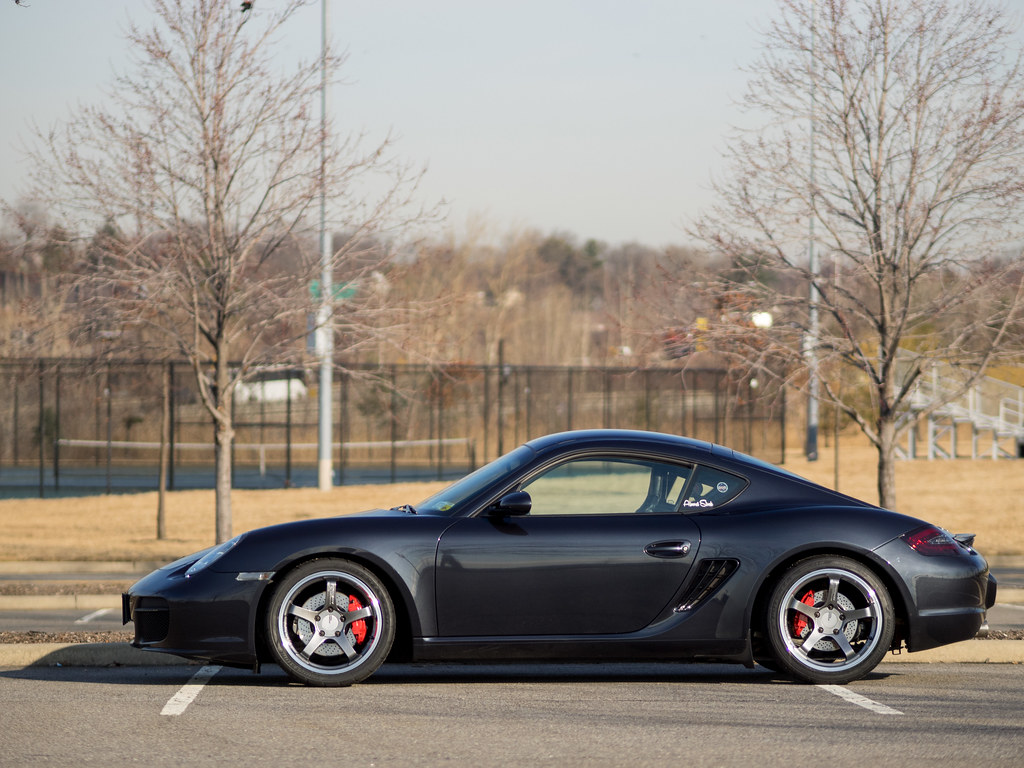
Kay - My 2007 Porsche Cayman S.
Bumblestook - My "Mugen"-ized 2002 Honda S2000 with AP2 engine.
Power
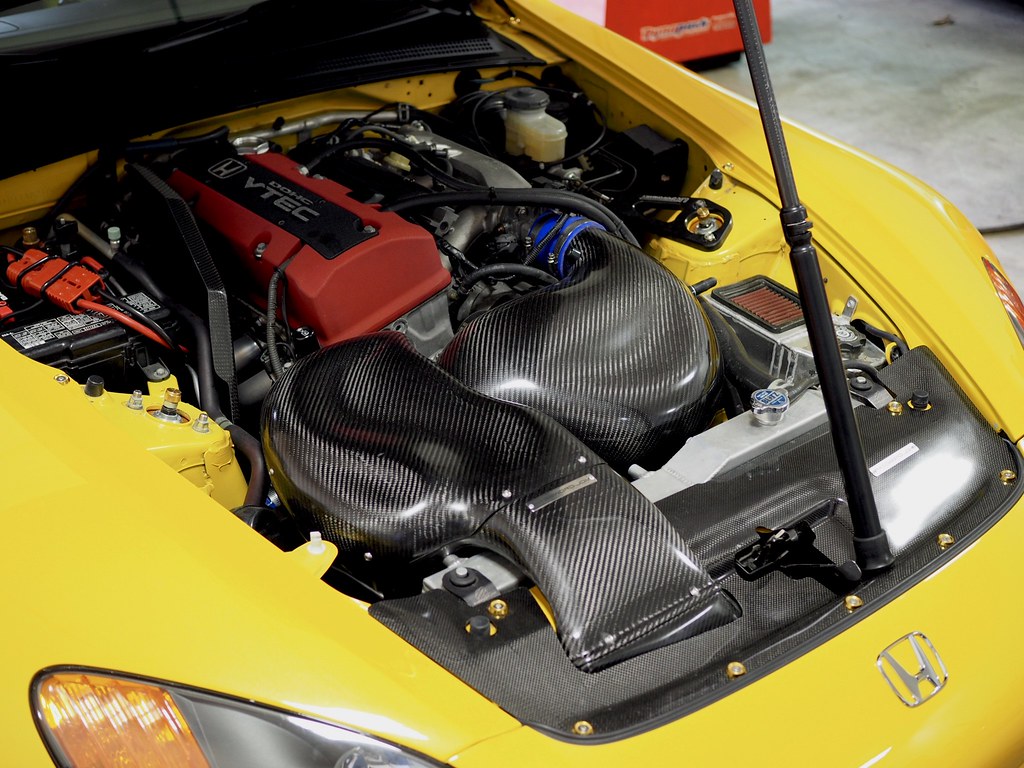
This is where every car comparison article throws out horsepower and torque numbers and 0-60 figures. They are useful data points but not that helpful in my opinion. Obviously, the Cayman S makes more torque and has more horsepower so this isn't even a power competition. What is very different is power delivery. Because the S2000 has less power (but also less weight) and makes the bulk of its power in the high RPMs, you really need to drive the car way up in the revs to get anything exciting going. This might be a downside for some but I think it's great. If I want to cruise around, get from A to B efficiently and stay under the radar, I can keep the RPMs low and it'll still be fun. I can play with the throttle in those low to mid-RPMs without creating any kind of drama. There's something to be said about driving a "slow car" fast and on twisty roads or tracks, this car is phenomenal. You can use the full range of the throttle, have a big smile on your face, and for the most part not kill yourself. The caveat, of course, is some quirks about handling which I'll touch on later but from a pure power perspective, the S2000 won't kill you or the car in general terms because of power alone. The F20C and F22C in the S2000 are masterpieces of engineering. With forged internals from the factory, these cars can put out very respectable power under forced induction with no change to the internals whatsoever and they can do so quite reliably. For me, boost changes the character of the car so while I'm not a purist in any way, shape, or form, I prefer my S2000 to be normally aspirated just as the designers had always intended from the start. I've sat in boosted S2000s many times and they will make you giggle like a school girl all day long so I definitely understand the appeal. It's just not for me.

The Cayman S on the other hand with its 3.4L flat 6 makes very good torque from the middle of the rpm range all the way to the top. As a normally aspirated engine, it delivers this power quite linearly and is very usable. The location of the engine behind the driver also makes the delivery of that power to the ground much better and for spirited driving on twisty roads, I never felt I needed more power (although as with all car guys, you always want more). The engine is very smooth even as you go up the revs and it makes a glorious sound that is only let down by the stock exhaust which is why I caved and eventually put an aftermarket one back on. The "barks" it makes as you heel-toe downshift is intoxicating. I find that it loves to comfortably cruise at around 4000 RPMs with the tach needle facing straight up. It's not the best for fuel economy but that's the sweet spot to activate fun mode at any time with the quick squeeze of the go-fast pedal. It does have an electronic throttle so while people say "Sports Chrono" does nothing on a manual car, it does indeed sharpen up the throttle response and if you can't feel it, then you're probably not sensitive enough as a driver. Although I have an FVD tune in Kay that's improved the throttle response even in normal mode, in sport mode the throttle is quite fast and is akin to the feeling I had when Bumblestook had ITBs on.
The Cayman S on the other hand with its 3.4L flat 6 makes very good torque from the middle of the rpm range all the way to the top. As a normally aspirated engine, it delivers this power quite linearly and is very usable. The location of the engine behind the driver also makes the delivery of that power to the ground much better and for spirited driving on twisty roads, I never felt I needed more power (although as with all car guys, you always want more). The engine is very smooth even as you go up the revs and it makes a glorious sound that is only let down by the stock exhaust which is why I caved and eventually put an aftermarket one back on. The "barks" it makes as you heel-toe downshift is intoxicating. I find that it loves to comfortably cruise at around 4000 RPMs with the tach needle facing straight up. It's not the best for fuel economy but that's the sweet spot to activate fun mode at any time with the quick squeeze of the go-fast pedal. It does have an electronic throttle so while people say "Sports Chrono" does nothing on a manual car, it does indeed sharpen up the throttle response and if you can't feel it, then you're probably not sensitive enough as a driver. Although I have an FVD tune in Kay that's improved the throttle response even in normal mode, in sport mode the throttle is quite fast and is akin to the feeling I had when Bumblestook had ITBs on.
Transmission
I firmly believe the S2000 has one of the best manual transmissions ever made. The shift lever goes straight into the transmission and every shift feels buttery smooth and precise. The throws are Goldilocks perfect, not too long, not too short, just right! Various specific use-cases aside, the AP2 transmission is the one you want with the improved carbon synchros and shorter gears from 1-4 for faster acceleration and a taller 6th gear for highway cruising for maximum MPGs. However, both the AP1 and AP2 transmissions are great and it's one of the things that gives me great joy every time I take Bumblestook out for a drive. I'll often hunt for roads that require me to shift a lot just so I can have fun rowing through the gears. This is what driving is all about, this is why I love manual transmissions so much.

The Cayman transmission in stock form is a bit of a let down to be honest. While the physical transmission itself is perfectly fine, the shift feels very dumbed down and uninspired. Shifting from gear to gear is "ok" at best and doesn't give you a lot of feedback. You can definitely tell which gear you're going into but it's not very satisfying. There's also a bit of a design flaw in the original shifter cables where they can snap and leave you stranded. Thankfully all this can be fixed. Porsche made a new design to the shifter cables that you can upgrade to that makes the cable snapping less likely but to fix the actual shift feel, you absolutely MUST upgrade to a Numeric Racing shifter. I can't rave about this shifter enough. It takes the shift feel from 2/10 to 10/10. If I had to pick one modification alone that's made me fall in love with my Cayman, it has been upgrading to the Numeric Racing shifter. It's that significant! You can adjust the throws (middle setting is best for me) and each engagement has an extremely satisfying bolt action rifle feel to it. If you're so inclined you can even go with the Numeric Racing shifter cables for maximum satisfaction (no, they did not pay me to say this).

One potential "issue" people have with the Cayman transmission is also the gearing. The gears are very tall. I can easily pass most highway speed limits just driving all the way to the top of 2nd. The downside here is that the torque of the engine feels a bit muted because of the gear ratios. The car would accelerate much faster if it only had slightly shorter gearing. The big upside is that I can get up to a good speed without necessarily hanging out at the top of the RPM range which is a blessing when I go over reliability later. You can get around some of the tall gearing issues by going with a smaller wheel and tire diameter but that only takes you so far. I don't necessarily see the gearing as a problem myself. I think it's perfectly fine. My only desire for shorter shifting is so that I'd have a reason to shift more because the Numeric Racing shifter installed in Kay feels just perfect.
The Cayman transmission in stock form is a bit of a let down to be honest. While the physical transmission itself is perfectly fine, the shift feels very dumbed down and uninspired. Shifting from gear to gear is "ok" at best and doesn't give you a lot of feedback. You can definitely tell which gear you're going into but it's not very satisfying. There's also a bit of a design flaw in the original shifter cables where they can snap and leave you stranded. Thankfully all this can be fixed. Porsche made a new design to the shifter cables that you can upgrade to that makes the cable snapping less likely but to fix the actual shift feel, you absolutely MUST upgrade to a Numeric Racing shifter. I can't rave about this shifter enough. It takes the shift feel from 2/10 to 10/10. If I had to pick one modification alone that's made me fall in love with my Cayman, it has been upgrading to the Numeric Racing shifter. It's that significant! You can adjust the throws (middle setting is best for me) and each engagement has an extremely satisfying bolt action rifle feel to it. If you're so inclined you can even go with the Numeric Racing shifter cables for maximum satisfaction (no, they did not pay me to say this).
One potential "issue" people have with the Cayman transmission is also the gearing. The gears are very tall. I can easily pass most highway speed limits just driving all the way to the top of 2nd. The downside here is that the torque of the engine feels a bit muted because of the gear ratios. The car would accelerate much faster if it only had slightly shorter gearing. The big upside is that I can get up to a good speed without necessarily hanging out at the top of the RPM range which is a blessing when I go over reliability later. You can get around some of the tall gearing issues by going with a smaller wheel and tire diameter but that only takes you so far. I don't necessarily see the gearing as a problem myself. I think it's perfectly fine. My only desire for shorter shifting is so that I'd have a reason to shift more because the Numeric Racing shifter installed in Kay feels just perfect.
Brakes
I think the brakes on both these cars are adequate and appropriately sized for their respective weight and power. The factory pads on the S2000 are more than enough for most street tire applications (including the high-performance 200TW tires) for all but track use. The stock pads, like most stock pads including those on the Cayman, are not good for sustained high heat applications so if you are going to track, get an appropriate track specific pad compound. On the Cayman, I recently upgraded to the Cayman R front pads and it's been a nice improvement in initial bite so if you want to stick to OEM that offers good braking power without a bunch of noise, the Cayman R front pads are the way to go (again, for non-track applications).

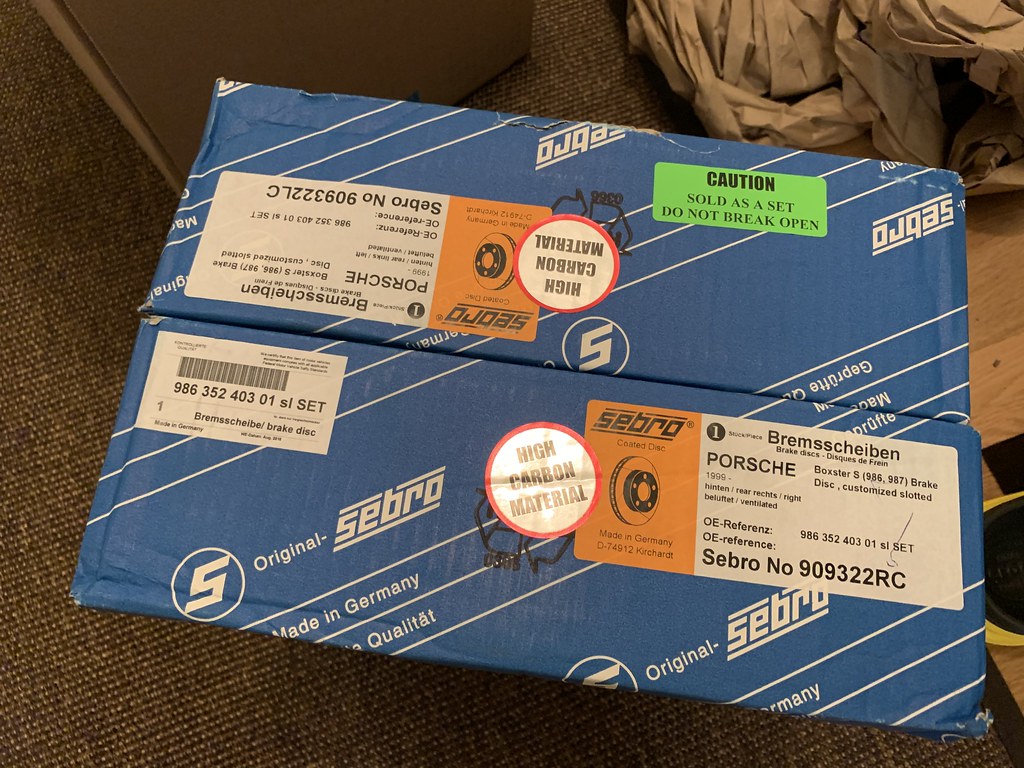
You see a lot of S2000 track drivers upgrade to a big brake kit. The purpose of this isn't necessarily for better braking power, it's that the stock brakes are a bit on the smaller side so having big brakes helps with heat dissipation and prevents rotors from cracking. I don't think it's an absolute must unless you're on super sticky tires or have significantly upgraded in power. Either way for any regular track application, I'd recommend adding appropriate brake ducts to help cool the brakes, especially on heavy braking tracks. The Cayman S has pretty big Brembo brakes from the factory. There are upgraded rotor options but one thing I think you should do if tracking is to get away from the factory drilled rotors. I guess Porsche ships them that way for looks and weight reduction but drilled rotors are more prone to cracking so I'm a big proponent of using slotted rotors instead.
PRO TIP: Remember, brakes don't slow down cars, tires do. Brakes only slow the wheel down so that the tire can slow the car down so keep in mind if you want good stopping distance, having the right performance tire matters the most. Having an awesome big brake kit or track pads isn't going to do anything but lock up if you went and bought the cheapest discount tire out there or have tires that are years old and have hardened.
You see a lot of S2000 track drivers upgrade to a big brake kit. The purpose of this isn't necessarily for better braking power, it's that the stock brakes are a bit on the smaller side so having big brakes helps with heat dissipation and prevents rotors from cracking. I don't think it's an absolute must unless you're on super sticky tires or have significantly upgraded in power. Either way for any regular track application, I'd recommend adding appropriate brake ducts to help cool the brakes, especially on heavy braking tracks. The Cayman S has pretty big Brembo brakes from the factory. There are upgraded rotor options but one thing I think you should do if tracking is to get away from the factory drilled rotors. I guess Porsche ships them that way for looks and weight reduction but drilled rotors are more prone to cracking so I'm a big proponent of using slotted rotors instead.
PRO TIP: Remember, brakes don't slow down cars, tires do. Brakes only slow the wheel down so that the tire can slow the car down so keep in mind if you want good stopping distance, having the right performance tire matters the most. Having an awesome big brake kit or track pads isn't going to do anything but lock up if you went and bought the cheapest discount tire out there or have tires that are years old and have hardened.
Handling
The whole point of owning a sports car is to drive a car that's agile. Sure there are cars built purely for straight-line speed, but when we think of sports cars, agility is a key trait. Both these cars deliver excellent handling but have subtle differences. The S2000 is very nimble with fast steering and quick turn-in and while the handling was softened with each generation, it's still a car you have to drive purposefully. Even though the car has had electric power steering (EPS) since its inception, Honda did a fantastic job providing good feel through the steering wheel and it's still easy to tell what's going on with the front wheels. The quick steering ratio also helps it negotiate corners with ease.

Sadly, many S2000s have been wrecked over the years by drivers that simply ran out of talent to drive one. To drive an S2000 quickly (and by quickly, I mean around corners, and not in a straight line) requires smooth inputs and quick reflexes. It can, and it will, swap ends on you if you are giving unnecessarily large and fast steering inputs with lots of throttle and don't manage weight transfer between the wheels appropriately. In many ways, it's what makes S2000 driving so rewarding. The car forces you to become a better driver or it will make sure you know about it in the worst way possible. If you don't respect the car, it will bite back. You can get to driving an S2000 quickly 8/10 with enough time behind the wheel but to drive one at 10/10 requires a lot more skill and it's that feeling that brings S2000 owners back to the platform even after selling it and buying other cars that are supposed to be "better".

The Cayman has excellent balance because of the mid-engine layout. The car pivots around the center of mass just behind the driver. Unlike older, short wheel-base mid-engine cars like the Toyota MR2, the Cayman is quite tossable without having to worry about it randomly spinning out of control mid-corner. I think the car even wants you to chuck it into corners with aggression. It doesn't get bent out of shape when you do and as you approach the limits, there's plenty of feedback throughout the chassis to catch it with minimal effort. If I drove the S2000 the way I drove the Cayman, I'd find myself wrapped around a tree in no time. The level of tolerance it has to hamfisted driving is high making it easier to push hard with confidence especially if you leave PASM (traction control) on. Even if you turn off PASM for maximum speed and control, I find it takes very little effort to keep the car in check.
The steering feel on the 987.1 is superb. It still has hydraulic steering and it is fantastic. The steering has just the right weight and going through the corners you feel everything going on through the steering wheel. It is one of my most favorite things about the platform. Being able to place the front wheels exactly where I want is very easy and I've found that at least for autocross, I've been able to more consistently be on top of cones than I used to.
The S2000 with its double-wishbone front and rear is superior to the Cayman and weight does make a difference. I suspect head to head around courses that aren't determined by raw power, my S2000 could outrun my Cayman at similar prep level. Stock vs Stock I'm not so sure, but I'd bet the S2000 would have a marginal handling advantage over the Cayman on a course where the Cayman's power couldn't be used as a big advantage.
Sadly, many S2000s have been wrecked over the years by drivers that simply ran out of talent to drive one. To drive an S2000 quickly (and by quickly, I mean around corners, and not in a straight line) requires smooth inputs and quick reflexes. It can, and it will, swap ends on you if you are giving unnecessarily large and fast steering inputs with lots of throttle and don't manage weight transfer between the wheels appropriately. In many ways, it's what makes S2000 driving so rewarding. The car forces you to become a better driver or it will make sure you know about it in the worst way possible. If you don't respect the car, it will bite back. You can get to driving an S2000 quickly 8/10 with enough time behind the wheel but to drive one at 10/10 requires a lot more skill and it's that feeling that brings S2000 owners back to the platform even after selling it and buying other cars that are supposed to be "better".
The Cayman has excellent balance because of the mid-engine layout. The car pivots around the center of mass just behind the driver. Unlike older, short wheel-base mid-engine cars like the Toyota MR2, the Cayman is quite tossable without having to worry about it randomly spinning out of control mid-corner. I think the car even wants you to chuck it into corners with aggression. It doesn't get bent out of shape when you do and as you approach the limits, there's plenty of feedback throughout the chassis to catch it with minimal effort. If I drove the S2000 the way I drove the Cayman, I'd find myself wrapped around a tree in no time. The level of tolerance it has to hamfisted driving is high making it easier to push hard with confidence especially if you leave PASM (traction control) on. Even if you turn off PASM for maximum speed and control, I find it takes very little effort to keep the car in check.
The steering feel on the 987.1 is superb. It still has hydraulic steering and it is fantastic. The steering has just the right weight and going through the corners you feel everything going on through the steering wheel. It is one of my most favorite things about the platform. Being able to place the front wheels exactly where I want is very easy and I've found that at least for autocross, I've been able to more consistently be on top of cones than I used to.
The S2000 with its double-wishbone front and rear is superior to the Cayman and weight does make a difference. I suspect head to head around courses that aren't determined by raw power, my S2000 could outrun my Cayman at similar prep level. Stock vs Stock I'm not so sure, but I'd bet the S2000 would have a marginal handling advantage over the Cayman on a course where the Cayman's power couldn't be used as a big advantage.
Reliability
I won't sugar coat this...the Honda is more reliable! Shocker right!? Let me elaborate on this more specifically. S2000s have proven their reliability in the now 20 years since it's first production. There are quite a lot of cars above 100,000 miles, that's a pretty low bar but there are more than a handful of S2000 with 200,000, even 300,000 miles plus and more still running. This is especially true when they've been well taken care of. Most issues people have are either from abuse or improper modification or both. The only real gotchas are early S2000 (pre-mid-2002) that had weak valve retainers that could cause a dropped valve (if combined with an over-rev) and an oil banjo bolt that didn't provide enough oiling. Both are relatively easy fixes with newer replacement parts from later generations. The engine otherwise is bulletproof with only minor oil leak issues from seals that need to get replaced as these cars have gotten older. The transmission is more than fine for stock power and even with most bolt-ons. They only start to have issues in boosted applications since they weren't really designed for double or triple the power levels from the factory. People do destroy the pinion gear in the diff but again, that's usually caused by abusive launches.
Another issue people often run into in the S2000 is a noisy timing chain tensioner. This happens as the timing chain stretches over time. This is easily remedied by one of the improved aftermarket or modified OEM timing tensioners. I personally recommend Billman's which is a modified Honda TCT and you never have to worry about it again. Also, over time the clutch master cylinder can start to leak especially if you don't change the fluid out regularly and the dirty fluid wears away at the seals. This is easy enough to detect (clutch fluid leaking down the clutch pedal inside the cabin) and replace before it leaves you stranded.
The 987.1, on the other hand, has its own set of concerns that you have to pay attention to. Yes, the car still has an IMS bearing. However, the IMS in the Cayman is the larger kind and frankly, I think the issue is overblown. I used to worry about it constantly before I bought one and really it's more of an issue I feel on cars that aren't driven or are overly babied. Drive the car hard like they're designed for. Letting these cars sit for long periods of time and letting seals dry up is worse than driving the car hard. Bore scoring is also a potential issue so if you're buying one, definitely get a PPI to get it checked out. You can watch videos about this and scare yourself to death but I believe you can mitigate a lot of it by making sure you use proper oil. You also need to make sure you get the car warmed up as quickly as possible, especially in the colder months and not push the car hard until the oil has properly warmed up. Things like letting the car idle in the wintertime when you're not going to drive it just to "warm the engine up", is a really bad idea. The tolerances on the pistons when cold coupled with the layout of the flat 6 can potentially allow some fuel to contaminate your oil and reduce its viscosity so the sooner you get the engine up to temp, the sooner those tolerances tighten up to minimize this problem. That doesn't mean you should start the car and rev it like crazy to get the engine up to temp. Keep the engine revs below 4K until the engine is fully warmed up. On a cold day, I'd say 10-15 minutes of normal driving is a good rule of thumb. Regular oil changes are a must. I don't think I'd let it go over 5000 miles without changing the oil. Most of these cars aren't driven much so even if driven much less than this I don't think the oil should sit there for more than a year. If you can, I'd at least change it twice a year (beginning and end of the season). Oil changes aren't cheap on this car but it's a heck of a lot cheaper than a replacement engine.
I talked about the shifter cable snapping earlier. That is a known issue and is well documented. If it hasn't been replaced, then replace it or at least inspect the condition on both ends. If you want to roll the dice, just remember that it can happen and depending on the failure, then you will likely have to be towed in since you can't shift when it snaps. It's relatively easy enough to fix if you wait until it breaks but it's unlikely it'll be something you can just fix on the side of the road so figure out what you want to do here to mitigate this risk. If you're upgrading to the Numeric Racing shifter that would be a good time to replace the cables.
Having hydraulic power steering is one of the best parts of the Cayman but this too can have a minor issue. At prolonged high RPMs the power steering pump heats up the fluid and it can overflow and leak. The two ways to fix this are by either installing an underdrive pulley so the PS pump doesn't spin so fast or adding a power steering cooler. I actually did both as an extra precaution. Like I said, I'm highly risk-averse.
The air-oil-separator (AOS) is also a source of problems especially as this age. This is effectively a fancy catch can that drains back into the engine. The problems that can happen here are that it can overfill too quickly (i.e. if you track the car and subject it to lots of high Gs) or the diaphragm inside can fail as the rubber weakens with age. These are fairly cheap (from a Porsche perspective) at around $150 or so new so lots of people just bring spares and replace them at the track if something goes wrong. A good fix for this is to upgrade to the motorsports version which offers a different chamber setup to prevent filling up the way the regular ones do but these are most definitely NOT cheap at around $1800 (yes, that's $1.8K, not a typo). I obviously went with the motorsports version due to the way I use my car so I wouldn't have to worry about it anymore. The telltale sign of a failing AOS is a smoking exhaust for a long period of time well past what you might see at first startup (although that can also be the telltale sign of bore scoring too so if that happens just pray it's the AOS).
The engine in the 987.1 is in a pretty enclosed space behind the driver so cooling it is tough. If you're just driving it around or even doing some spirited driving then the cooling system will do a good enough job but if you plan on doing track time with sustained high engine loads, I highly recommend you add the optional center (third) radiator that was fitted from the factory on the Tiptronic equipped cars. Just remember that the most expensive thing inside a 987.1 Cayman is the engine. You might be able to find used engines for $15k or you can rebuild them to make them bulletproof for maybe $20-$25k depending on what you're doing. For me, anything I can do to improve the lubrication and cooling to save me from blowing up this engine that costs as much as really nice low mileage S2000 is worth it for me.
It's also not advised that you stay above 6700 RPMs for extended periods. You wouldn't normally do this anyway driving around but the connecting rod bolts can stretch if you run the car at high RPMs for long durations (think track time). Most owners will advise you to shift early to avoid this problem which is why the taller gearing is nice because you actually don't have to spend a lot of time in those higher RPMs to get the most from the car.
I realize the list of potential issues on a 987.1 Cayman S is a bit on the long side and much of this is eliminated in the 987.2 Cayman S since they switched to a DFI (direct fuel injection) engine. But keep in mind that the premium for a 987.2 over a 987.1 is about the cost of an engine so for me I feel that if you do your homework, get a proper PPI, do the upgrades to protect the engine and maintain and drive your car well then the 987.1 Cayman S is a bargain for the kind of car it is. I no longer lose sleep over wondering what might happen or if something bad will happen. If you pick any car and just go to forums or groups and ask about the bad stuff, the laundry list can get pretty long for any of them. The reality is typically different and ultimately it's up to you as the owner to figure out what level of risk is acceptable. Either way, the 987.1 is a car that does need extra attention. It's not a car for someone that just wants to change oil, add fuel and go but if you can be a smart, responsible owner, then these are phenomenal cars and I have no plans of selling mine anytime soon.
Another issue people often run into in the S2000 is a noisy timing chain tensioner. This happens as the timing chain stretches over time. This is easily remedied by one of the improved aftermarket or modified OEM timing tensioners. I personally recommend Billman's which is a modified Honda TCT and you never have to worry about it again. Also, over time the clutch master cylinder can start to leak especially if you don't change the fluid out regularly and the dirty fluid wears away at the seals. This is easy enough to detect (clutch fluid leaking down the clutch pedal inside the cabin) and replace before it leaves you stranded.
The 987.1, on the other hand, has its own set of concerns that you have to pay attention to. Yes, the car still has an IMS bearing. However, the IMS in the Cayman is the larger kind and frankly, I think the issue is overblown. I used to worry about it constantly before I bought one and really it's more of an issue I feel on cars that aren't driven or are overly babied. Drive the car hard like they're designed for. Letting these cars sit for long periods of time and letting seals dry up is worse than driving the car hard. Bore scoring is also a potential issue so if you're buying one, definitely get a PPI to get it checked out. You can watch videos about this and scare yourself to death but I believe you can mitigate a lot of it by making sure you use proper oil. You also need to make sure you get the car warmed up as quickly as possible, especially in the colder months and not push the car hard until the oil has properly warmed up. Things like letting the car idle in the wintertime when you're not going to drive it just to "warm the engine up", is a really bad idea. The tolerances on the pistons when cold coupled with the layout of the flat 6 can potentially allow some fuel to contaminate your oil and reduce its viscosity so the sooner you get the engine up to temp, the sooner those tolerances tighten up to minimize this problem. That doesn't mean you should start the car and rev it like crazy to get the engine up to temp. Keep the engine revs below 4K until the engine is fully warmed up. On a cold day, I'd say 10-15 minutes of normal driving is a good rule of thumb. Regular oil changes are a must. I don't think I'd let it go over 5000 miles without changing the oil. Most of these cars aren't driven much so even if driven much less than this I don't think the oil should sit there for more than a year. If you can, I'd at least change it twice a year (beginning and end of the season). Oil changes aren't cheap on this car but it's a heck of a lot cheaper than a replacement engine.
I talked about the shifter cable snapping earlier. That is a known issue and is well documented. If it hasn't been replaced, then replace it or at least inspect the condition on both ends. If you want to roll the dice, just remember that it can happen and depending on the failure, then you will likely have to be towed in since you can't shift when it snaps. It's relatively easy enough to fix if you wait until it breaks but it's unlikely it'll be something you can just fix on the side of the road so figure out what you want to do here to mitigate this risk. If you're upgrading to the Numeric Racing shifter that would be a good time to replace the cables.
Having hydraulic power steering is one of the best parts of the Cayman but this too can have a minor issue. At prolonged high RPMs the power steering pump heats up the fluid and it can overflow and leak. The two ways to fix this are by either installing an underdrive pulley so the PS pump doesn't spin so fast or adding a power steering cooler. I actually did both as an extra precaution. Like I said, I'm highly risk-averse.
The air-oil-separator (AOS) is also a source of problems especially as this age. This is effectively a fancy catch can that drains back into the engine. The problems that can happen here are that it can overfill too quickly (i.e. if you track the car and subject it to lots of high Gs) or the diaphragm inside can fail as the rubber weakens with age. These are fairly cheap (from a Porsche perspective) at around $150 or so new so lots of people just bring spares and replace them at the track if something goes wrong. A good fix for this is to upgrade to the motorsports version which offers a different chamber setup to prevent filling up the way the regular ones do but these are most definitely NOT cheap at around $1800 (yes, that's $1.8K, not a typo). I obviously went with the motorsports version due to the way I use my car so I wouldn't have to worry about it anymore. The telltale sign of a failing AOS is a smoking exhaust for a long period of time well past what you might see at first startup (although that can also be the telltale sign of bore scoring too so if that happens just pray it's the AOS).
The engine in the 987.1 is in a pretty enclosed space behind the driver so cooling it is tough. If you're just driving it around or even doing some spirited driving then the cooling system will do a good enough job but if you plan on doing track time with sustained high engine loads, I highly recommend you add the optional center (third) radiator that was fitted from the factory on the Tiptronic equipped cars. Just remember that the most expensive thing inside a 987.1 Cayman is the engine. You might be able to find used engines for $15k or you can rebuild them to make them bulletproof for maybe $20-$25k depending on what you're doing. For me, anything I can do to improve the lubrication and cooling to save me from blowing up this engine that costs as much as really nice low mileage S2000 is worth it for me.
It's also not advised that you stay above 6700 RPMs for extended periods. You wouldn't normally do this anyway driving around but the connecting rod bolts can stretch if you run the car at high RPMs for long durations (think track time). Most owners will advise you to shift early to avoid this problem which is why the taller gearing is nice because you actually don't have to spend a lot of time in those higher RPMs to get the most from the car.
I realize the list of potential issues on a 987.1 Cayman S is a bit on the long side and much of this is eliminated in the 987.2 Cayman S since they switched to a DFI (direct fuel injection) engine. But keep in mind that the premium for a 987.2 over a 987.1 is about the cost of an engine so for me I feel that if you do your homework, get a proper PPI, do the upgrades to protect the engine and maintain and drive your car well then the 987.1 Cayman S is a bargain for the kind of car it is. I no longer lose sleep over wondering what might happen or if something bad will happen. If you pick any car and just go to forums or groups and ask about the bad stuff, the laundry list can get pretty long for any of them. The reality is typically different and ultimately it's up to you as the owner to figure out what level of risk is acceptable. Either way, the 987.1 is a car that does need extra attention. It's not a car for someone that just wants to change oil, add fuel and go but if you can be a smart, responsible owner, then these are phenomenal cars and I have no plans of selling mine anytime soon.
Build Quality
The S2000 is built well but it does tend to have more than its fair share of squeaks and rattles that are most noticeable when you have the top up. Probably one reason many owners drive with the top down all the time is to avoid hearing all of those noises. I don't think it's because the chassis flexes too much or poor material was chosen but they do use the minimal number of fasteners needed to secure things and with the engine being so high revving, over time things just vibrate their way loose. On Bumblestook, with stiffer engine mounts and spherical bushings everywhere, almost every bolt on the car has Loctite on it because anytime we don't, it has found a way to disassemble itself whether it's a 10mm socket holding the CR tonneau cover, or a bolt holding my rear damper in place.
On the other hand, the Cayman is actually really well built, maybe even over-engineered, and when you get under the car you can really see how crazy German engineering can be. Things are fastened down at multiple points so things don't just move around which also makes it a pain to do simple things like changing sway bars. I think if you keep a Cayman stock and don't start screwing around with body panels and breaking clips and so on, everything will just stay held on tight. My biggest gripe with build quality in this generation Cayman is the use of this rubbery like paint in the interior that peels away over time or if you impact it. The text on the buttons of the climate control also just disappear over time from just touching it or peel away which makes the interior look pretty cheap if you don't fix it. If you look at some high mileage Caymans that were not looked after well, the interiors look pretty embarrassing. The good news is that it's really easy and cheap to find replacement interior panels.
On the other hand, the Cayman is actually really well built, maybe even over-engineered, and when you get under the car you can really see how crazy German engineering can be. Things are fastened down at multiple points so things don't just move around which also makes it a pain to do simple things like changing sway bars. I think if you keep a Cayman stock and don't start screwing around with body panels and breaking clips and so on, everything will just stay held on tight. My biggest gripe with build quality in this generation Cayman is the use of this rubbery like paint in the interior that peels away over time or if you impact it. The text on the buttons of the climate control also just disappear over time from just touching it or peel away which makes the interior look pretty cheap if you don't fix it. If you look at some high mileage Caymans that were not looked after well, the interiors look pretty embarrassing. The good news is that it's really easy and cheap to find replacement interior panels.
Practicality
The S2000 was clearly designed as a roadster built to be a fun driving car first and foremost. It's got a fairly small trunk that can fit a few things if you're creative but finding space is always a challenge. People do daily drive them if they don't have to bring a lot of stuff all the time and I have been able to bring a surprisingly large amount of stuff with me on road trips but only if these items can be split up into smaller bundles or bags and use the passenger seat and foot-well as extra storage.

The Cayman is extremely practical. The mid-engine layout lends itself to having two trunks, one in the front (frunk) and the one in the rear plus the space above the engine. Except for large, long boxes, you can really fit a lot of stuff inside a Cayman and it can easily be a daily driver or even road trip worthy for two people without too much compromise. I think this is one of the biggest draws to the Cayman in that despite being a two-seater, you're not sacrificing much in terms of general usability so it can, in fact, be one car to do many things.
The Cayman is extremely practical. The mid-engine layout lends itself to having two trunks, one in the front (frunk) and the one in the rear plus the space above the engine. Except for large, long boxes, you can really fit a lot of stuff inside a Cayman and it can easily be a daily driver or even road trip worthy for two people without too much compromise. I think this is one of the biggest draws to the Cayman in that despite being a two-seater, you're not sacrificing much in terms of general usability so it can, in fact, be one car to do many things.
Styling
This is the most subjective part of this because styling is a very personal choice. One thing for sure, the S2000 was designed and originally built in the late 90s and even today, its classic lines don't look out of place among newer cars. Similarly, Porsche really isn't known for doing anything very drastic style-wise with their cars. To the untrained eye, most Porsches look the same. I will say though that I've always liked the proportions of the 987 with its wide hips and sleek lines and I appreciate the fact that it's "just the right size". The newer generations have gotten bigger and I don't really see that as a positive thing. I prefer smaller cars and with the S2000 and 987 Cayman differing in wheelbase by only 0.6 inches, they're quite comparable. Both are minimalist in their interiors and very driver-centric.
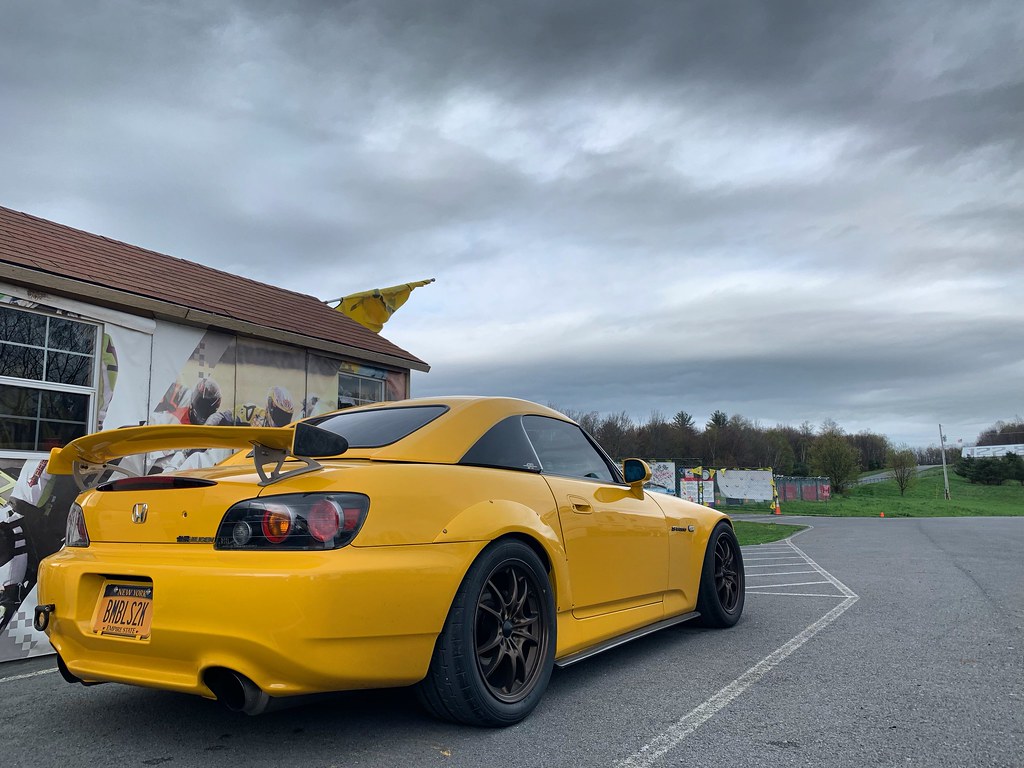
The S2000s long hood and flat profile really accentuate its gorgeous simple lines. I appreciate them stock but it does sit a little high from the factory and the front fascia just needs a bit of extra aggression. This is easily remedied with some suspension modifications to lower the car a bit and a lip of some sort to make the front less round. The super basic interior and all-digital dash aren't for everyone but I think it highlights the fact that this car was designed to be driven not lived in.
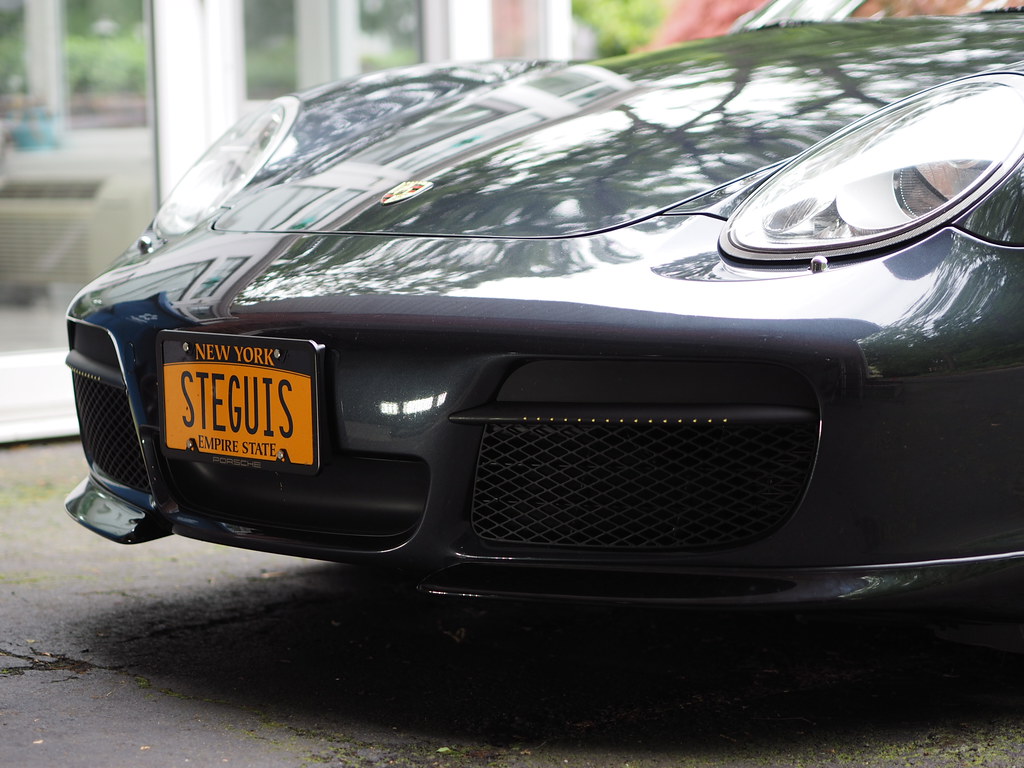
I don't think the Cayman has any bad angles. There are lots of flowing lines but my favorite is looking at it from the rear with the sweeping rear arches. It looks strong and muscular while still looking sleek and refined. The front is a bit weak to me. The OEM aerokit front splitters are probably the most minimum change I'd make to add a little aggressiveness up front but if you see pictures of Caymans with full splitters, they all look really good. I love the rear as is but I'm a big fan of ducktail spoilers so Kay has one but that's really just a personal thing. I don't think the car necessarily needs it. I do think the 987.2 rear looks a bit better especially around the taillights but a simple rear tail light replacement on the 987.1 closes that gap sufficiently for me.

I actually like the interior from the factory. The sports seats would probably be the ideal all-purpose interior seat since it still has all the comfort but with added support. The regular seats just don't do a good job of holding you it but they're more than fine if you got the car primarily as a fun daily driver. I really love the analog gauges, even the rather useless sports chrono clock if your car is equipped with one. Visually, the sports chrono clock looks good even though practically I don't think anyone actually uses it. It's also a convenient place to put any arbitrary 52mm gauge so I'll be re-purposing that space on mine in the near future. The OEM head unit has really started to show its age though. The good thing is that if this really bothers you, it's easy enough to fit any standard double din head unit into that space.
I really like how both these cars look which is why I own both of them. They both adhere to simple, functional, design principles and are both sure to age well.
The S2000s long hood and flat profile really accentuate its gorgeous simple lines. I appreciate them stock but it does sit a little high from the factory and the front fascia just needs a bit of extra aggression. This is easily remedied with some suspension modifications to lower the car a bit and a lip of some sort to make the front less round. The super basic interior and all-digital dash aren't for everyone but I think it highlights the fact that this car was designed to be driven not lived in.
I don't think the Cayman has any bad angles. There are lots of flowing lines but my favorite is looking at it from the rear with the sweeping rear arches. It looks strong and muscular while still looking sleek and refined. The front is a bit weak to me. The OEM aerokit front splitters are probably the most minimum change I'd make to add a little aggressiveness up front but if you see pictures of Caymans with full splitters, they all look really good. I love the rear as is but I'm a big fan of ducktail spoilers so Kay has one but that's really just a personal thing. I don't think the car necessarily needs it. I do think the 987.2 rear looks a bit better especially around the taillights but a simple rear tail light replacement on the 987.1 closes that gap sufficiently for me.
I actually like the interior from the factory. The sports seats would probably be the ideal all-purpose interior seat since it still has all the comfort but with added support. The regular seats just don't do a good job of holding you it but they're more than fine if you got the car primarily as a fun daily driver. I really love the analog gauges, even the rather useless sports chrono clock if your car is equipped with one. Visually, the sports chrono clock looks good even though practically I don't think anyone actually uses it. It's also a convenient place to put any arbitrary 52mm gauge so I'll be re-purposing that space on mine in the near future. The OEM head unit has really started to show its age though. The good thing is that if this really bothers you, it's easy enough to fit any standard double din head unit into that space.
I really like how both these cars look which is why I own both of them. They both adhere to simple, functional, design principles and are both sure to age well.
Final Thoughts
At this point, you'd expect me to pick which one is better and in my mind, I actually can't pick one. Both offer a unique driving and ownership experience. If you had to pick one, I think this is certainly a case where it really depends on what the owner wants to do with the vehicle. It's truly apples to oranges. I have no intention of ever selling Bumblestook but that has more to do with all the shared experiences I've had with her over the years. Kay has earned her place in the stable and I thoroughly enjoy driving her both in and out of competition now that I've modified her the way I want. I have no immediate plans on replacing her either. In fact, the upcoming modifications I have planned for when I come back from Nationals is so that I can expand the types of events I can enjoy her in.
The S2000 is in my book, the last of the pure Honda performance-focused cars as imagined by Soichiro Honda. Designed and built at the peak of Honda, and glossed over by many during the final years of its 10-year production run, more people are now discovering the genius in its design. It is why these cars are now shooting up in value and achieving collector status. There are still many good "driver-grade" cars available out there at reasonable prices but I'd personally stay away from the really cheap ones unless you're doing some kind of project build yourself. A lot of those need plenty of TLC and are frequently owned by people that were just looking for a "cheap" S2000 that are less likely to put the time and money to really make them mechanically perfect. I'm not saying don't consider them, but really put them under a microscope if this is your first S2000 because in many cases you'd be better off spending a little bit more for a well-sorted one. Whatever you do, if you've never driven an S2000, do not use one of those as a benchmark to what these cars feel like. If you love high revving engines, open-top driving, scalpel level precision handling, pure manual gearbox and a challenge in driving that is rewarding at so many levels, then you need to pick up a well-cared-for S2000, find the twistiest roads you can find and see the light.
One thing about the 987.1 Cayman S that you do have to understand despites the number of concerns I raised above is that there's just something incredible about driving a mid-engine Porsche that you just don't get anywhere else. If you've never owned one, you need to. When the C8 Corvette was announced, one of the videos released by Chevy from the designers and engineers of the car talked about why the Vette needed to become mid-engine to evolve. In that video when they were talking about the transformation that happens when you put the engine right behind the driver and make that the pivot point for the vehicle, all I could do was nod and agree. Porsche has continued to restrict the performance of their mid-engined cars so as not eclipse the iconic flagship 911 but look at their race cars and all of them have shifted the engine forward closer to the driver. The mid-engine layout is superior in every way and with a proper power plant, mid-engine cars are a force to be reckoned with. The 987.1 Cayman S is, in that respect, a low cost of entry into an experience that is uniquely Porsche.
The S2000 is in my book, the last of the pure Honda performance-focused cars as imagined by Soichiro Honda. Designed and built at the peak of Honda, and glossed over by many during the final years of its 10-year production run, more people are now discovering the genius in its design. It is why these cars are now shooting up in value and achieving collector status. There are still many good "driver-grade" cars available out there at reasonable prices but I'd personally stay away from the really cheap ones unless you're doing some kind of project build yourself. A lot of those need plenty of TLC and are frequently owned by people that were just looking for a "cheap" S2000 that are less likely to put the time and money to really make them mechanically perfect. I'm not saying don't consider them, but really put them under a microscope if this is your first S2000 because in many cases you'd be better off spending a little bit more for a well-sorted one. Whatever you do, if you've never driven an S2000, do not use one of those as a benchmark to what these cars feel like. If you love high revving engines, open-top driving, scalpel level precision handling, pure manual gearbox and a challenge in driving that is rewarding at so many levels, then you need to pick up a well-cared-for S2000, find the twistiest roads you can find and see the light.
One thing about the 987.1 Cayman S that you do have to understand despites the number of concerns I raised above is that there's just something incredible about driving a mid-engine Porsche that you just don't get anywhere else. If you've never owned one, you need to. When the C8 Corvette was announced, one of the videos released by Chevy from the designers and engineers of the car talked about why the Vette needed to become mid-engine to evolve. In that video when they were talking about the transformation that happens when you put the engine right behind the driver and make that the pivot point for the vehicle, all I could do was nod and agree. Porsche has continued to restrict the performance of their mid-engined cars so as not eclipse the iconic flagship 911 but look at their race cars and all of them have shifted the engine forward closer to the driver. The mid-engine layout is superior in every way and with a proper power plant, mid-engine cars are a force to be reckoned with. The 987.1 Cayman S is, in that respect, a low cost of entry into an experience that is uniquely Porsche.